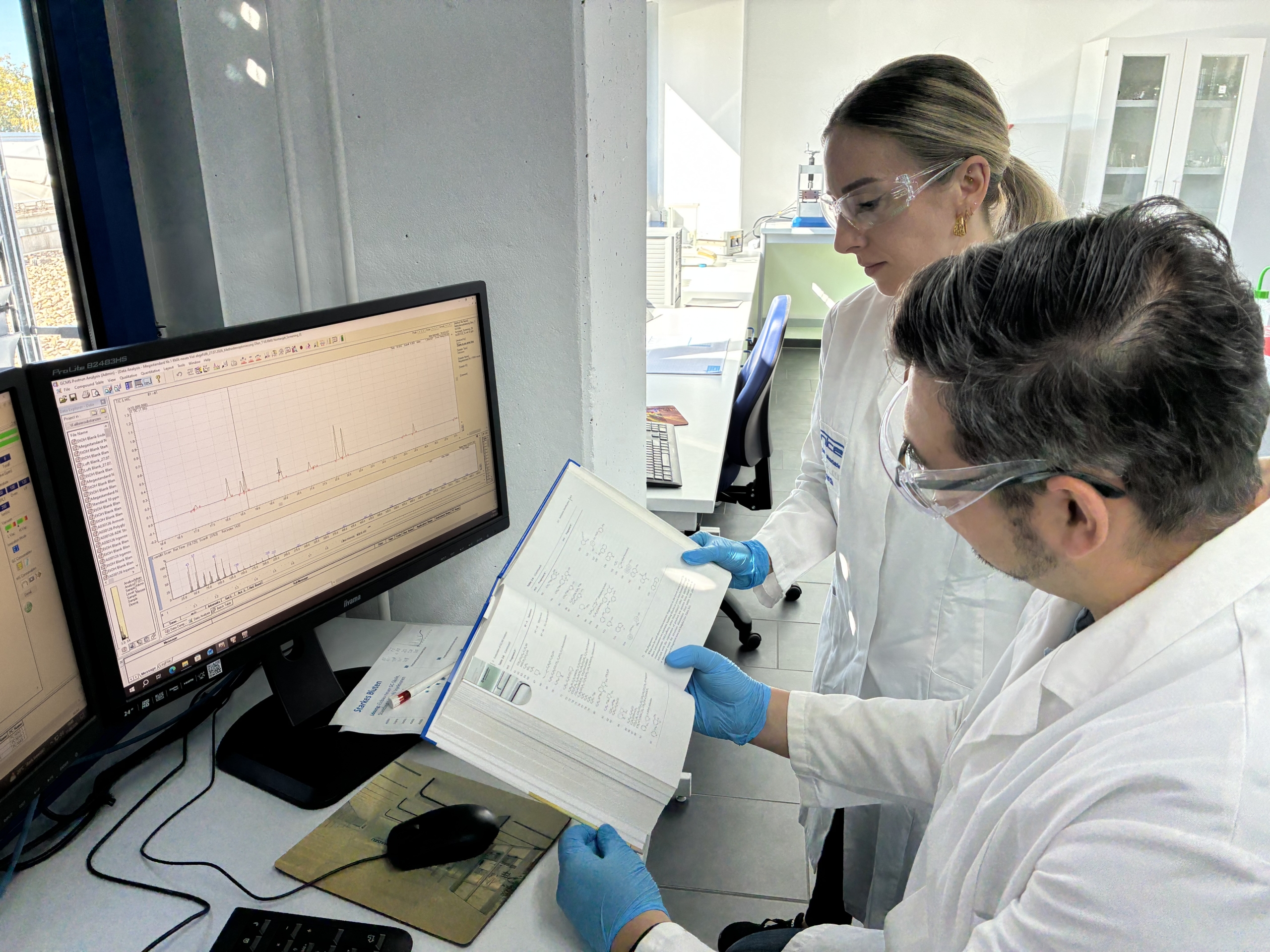
NIAS: New requirements for packaging
The requirements for packaging are constantly increasing. Alongside issues such as recyclability and the use of recycled materials, another aspect is now coming more into focus: NIAS (Non-Intentionally Added Substances).
These are substances that are not deliberately added to packaging but may arise, for example, from raw materials, additives or manufacturing processes.
From September 2026, these substances must be given greater consideration and assessed throughout the entire supply chain. This applies equally to raw material manufacturers, masterbatch manufacturers, converters and packaging manufacturers.
What does this mean for packaging manufacturers?
For packaging manufacturers, transparency and traceability will become even more important in future. Customers, brand owners and auditors increasingly expect information on which substances may be present in packaging and how these are evaluated.
This issue is particularly relevant for:
- Food packaging
- Cosmetics packaging
- Packaging containing recycled materials (PCR)
- Applications with high quality and safety requirements
At the same time, the requirements under the PPWR are increasing. The increased use of recycled materials is a key component of the circular economy, but it adds to the complexity of evaluating potential NIAS.
Understanding NIAS rather than just measuring them
Many companies have so far relied on standard analyses or general explanations from their suppliers.
The challenge: NIAS are often highly complex. Even minor changes to raw materials, suppliers or formulations can affect a material’s chemical profile. Not every substance can be identified automatically, and not every anomaly can be readily attributed to its cause.
This is precisely why specialist knowledge, an understanding of materials and analytical expertise are becoming increasingly important.
Finke invests in its own NIAS expertise
To provide customers with the best possible support in meeting these new requirements, Finke has set up its own fully equipped NIAS laboratory.
There, our experts analyse materials, raw materials, additives and masterbatches for potentially relevant substances and evaluate their origin and possible effects.
The key advantage: as a manufacturer, we are familiar not only with the analysis results but also with the raw materials, pigments, additives and formulations used. This allows us to trace potential causes much more precisely than is possible with a standard analysis carried out by external laboratories.
Greater transparency for our customers
With our in-house NIAS laboratory, we help customers to
- identify potential risks at an early stage,
- gain greater transparency regarding the materials used,
- better evaluation of material changes,
- answer queries from brand owners and auditors,
- prepare for future regulatory requirements.
This additional expertise offers significant added value, particularly for food, cosmetics and PCR applications.
A strong partner for the packaging of tomorrow
The demands placed on packaging are evolving rapidly. Issues such as NIAS, PPWR, recyclability and PCR will be even more closely interlinked in the future.
With our in-house NIAS laboratory, decades of masterbatch experience and in-depth material expertise, Finke supports its customers in designing packaging solutions that are safe, compliant and future-proof.
Finke does more than just supply masterbatches. Finke offers analysis, transparency and expertise to meet the challenges of tomorrow.